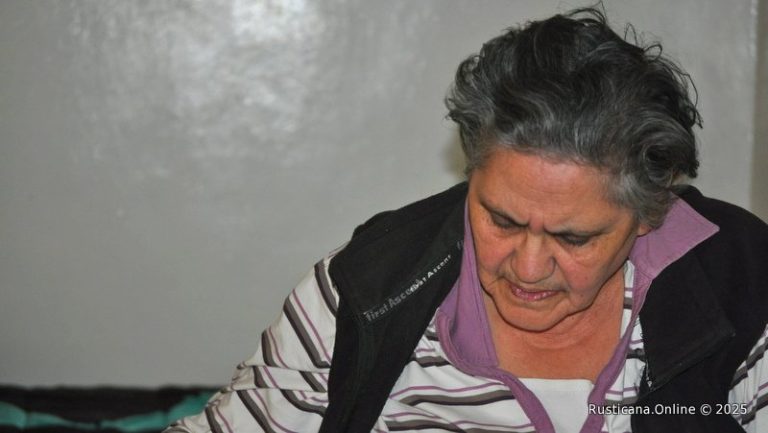
My Mom’s Revelations: An Easter weekend that changed everything!
The journey of restoring a home in the Karoo is often a reflection of the lives we live within its walls—filled with milestones of joy, but also with moments of profound, quiet sorrow. During the Easter weekend of 2017, what was intended to be a routine getaway to Brandvlei transformed into a pivotal, heartbreaking chapter for our family. It was a trip that stripped away the focus on renovations and redirected it toward the fragile reality of the human spirit.
For some time, my mother had been increasingly difficult for my elderly father to manage. The woman who had always been a pillar of our family was slipping into a fog of confusion, and we strongly suspected the onset of Alzheimer’s. Without an official diagnosis, we were living in a state of suspended animation, witnessing the symptoms but lacking the language to define them. Seeing the toll it was taking on my father, my wife and I decided to bring Mom with us to Brandvlei for the long weekend. The goal was simple: give my dad a much-needed reprieve and provide Mom with a change of scenery in the peaceful expanse of the Northern Cape.
We had planned to stay until Easter Monday, but as is often the case when dealing with neurological decline, the environment of a different home—even one she knew—accelerated the manifestations of her condition.
The turning point arrived on Easter Sunday morning. It is a moment etched into my memory with painful clarity. I found my mother in her room, the early Karoo light spilling across the floor, but her expression was one of total darkness. She was struggling, even in those early stages, to tether herself to reality. As I sat with her on the edge of the bed, she began to weep—not with the fleeting sadness of a bad mood, but with the raw, terrifying honesty of someone who knows they are losing their grip on themselves.
"I need help," she told me through her tears. "Something is wrong, and I don’t know what it is."
To see your mother—the person who once explained the world to you—look at you with such utter vulnerability and confusion is a soul-shaking experience. In that moment, the lack of an official diagnosis felt like a secondary concern. She didn’t need a medical term; she needed to know she wasn't alone in the void. I did my best to explain what I believed was happening, avoiding clinical jargon and focusing instead on reassurance. I held her hand and promised her, over and over again, that I would look after her and stay by her side until the very end of her days. I can only hope that, amidst the static of her changing mind, those words acted as an anchor.
However, the reality of her cognitive decline was now undeniable. The confusion was no longer something we could observe from a distance; it was an active force in the room. Her distress was so profound that we realised the best thing for her was the familiarity of her own home in Cape Town. We made the difficult decision to cut the trip short and began the long drive back that very Easter Sunday.
That drive home felt different from any other. The vast landscapes of the Karoo, which usually represent freedom and project-planning, felt heavy with the weight of this new reality. This trip didn’t result in a painted wall or a fixed pipe, but it solidified a commitment that is far more permanent than any renovation. It brought home the full, staggering reality of what her condition would mean for our family.
It is an ongoing journey, one that requires more patience and emotional stamina than any physical labour we’ve ever performed at Rusticana. Witnessing her struggle was incredibly tough, yet it deeply reinforced my resolve to be there for her through every step of this decline. As we navigate the complexities of her health, the house in Brandvlei remains a symbol of endurance—a place where we build for the future, even when the present feels like it’s slipping through our fingers.