The Weight of Ambition: A hard-learned lesson on the slopes of the Vanrhyns Pass.
The pre-dawn air in Cape Town has a specific stillness to it—a quiet expectancy that usually signals the start of a grand adventure. At 4:30 AM on a Saturday, the city was a silhouette in the rear-view mirror as we began our journey northbound. Our destination was Brandvlei, deep in the heart of the Northern Cape Province, at a site we call Rusticana.
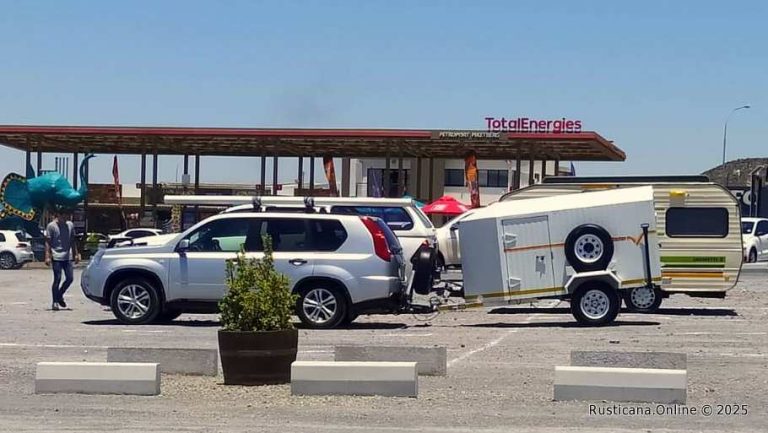
We were prepared—or so we thought. Our checklists were ticked, our spirits were high, and the Nissan X-Trail dCi hummed with the promise of a successful expedition. However, looking back, this trip would not be remembered for the destination, but for a terrifying brush with the limits of physics and the humbling realisation that even the best-laid plans can fail when you ignore the cold, hard math of weight and leverage.
The first leg of the journey was deceptively routine. We bypassed the familiar landmarks that have framed our travels since 2006: Malmesbury, Moorreesburg, and Piketberg, where we stopped for a quick coffee and bathroom break.
The first real test was the Piekenierskloof Pass just before Citrusdal. While the X-Trail crested the pass without mechanical protest, I felt a nagging sensation through the steering wheel. The response was sluggish; the vehicle felt "heavy" in a way I hadn’t experienced before. I dismissed it as the typical burden of a long-haul load, a mental error that nearly cost us dearly.
As we transitioned from the lush citrus groves of the Western Cape through Clanwilliam, Trawal, and Klawer, the landscape began to shift into the rugged, arid beauty of the Namaqua region. By the time we reached Vanrhynsdorp, the shadow of the great escarpment loomed ahead.
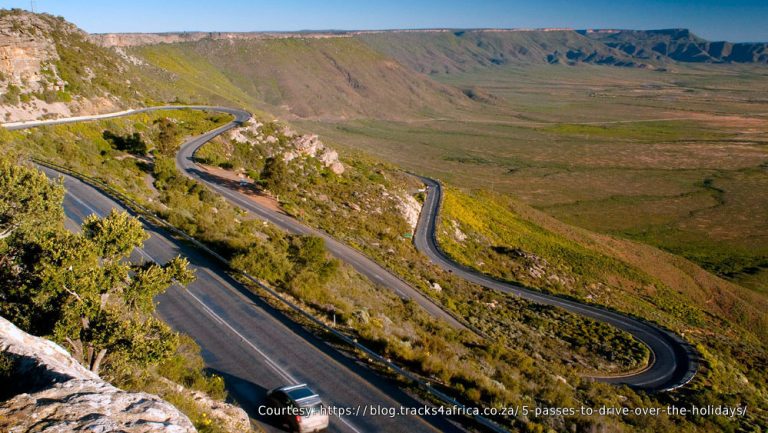
Before us lay the notorious Vanrhyns Pass. Originally carved into the mountainside by the legendary road engineer Thomas Bain and named after the politician P.B. Van Rhyn, it is a masterpiece of Victorian-era ambition. It is a well-engineered ascent with an average gradient of 1:15, though the hairpins tighten to a punishing 1:12. It is a pass known for its "misgivings"—a polite way of saying it has claimed many vehicles that underestimated its steep, winding 9-kilometre stretch.
As we began the ascent, tucked behind a massive 18-wheel transport truck, the reality of our situation hit with the force of a physical blow. Within the first 1.5 kilometres, the X-Trail began gasping for energy. The momentum vanished. The weight of the trailer felt less like a load and more like an anchor dragging us backwards.
Our failure wasn't just about weight; it was about leverage. While the Nissan X-Trail dCi boasts a respectable 2,000 kg (2-ton) towing capacity, we had inadvertently sabotaged its engineering.
In our preparation, we had added:
- An external spare wheel holder with a spacer plate.
- A tow-bar extender.
By extending the distance between the rear axle and the hitch point, we had created a massive lever. This shifted the "tongue weight" of the trailer, effectively lifting the front end of our front-wheel-drive vehicle. We had plenty of power under the hood, but we had no traction on the road.
In a moment of mounting panic, I made a tactical error: I pulled over into a gravel lay-by on an incline to clear the path for the truck behind us. On the loose surface, the front wheels simply spun. We were stuck on the side of a mountain, heavy, unbalanced, and dangerously close to the edge.
The Turning Point: My wife, our two adult children, and our dachshund had to exit the vehicle to lighten the load and, more importantly, to ensure their safety should the rig slip. In second gear, with my heart hammering against my ribs, I managed to manoeuvre the trailer around on the narrow road, facing the decline back toward the safety of the valley floor.
The journey back to Cape Town was a sombre "nursing" of the vehicle. We were defeated by our own over-eagerness. Before we could even make the trek home, we had to shed ballast. We disposed of 50 kg of fresh water and 120 kg of building sand—170 kg of dead weight that had pushed us over the brink.
Once back in the safety of my driveway, the visual evidence was staggering. When we removed the tow-bar extenders and the spacer plates and re-hitched the trailer, the vehicle sat level. The "nose-up" stance that had nearly caused a catastrophe was gone.
This experience was a frightening wake-up call for my entire family. From this near-miss, I offer two non-negotiable rules for any traveller:
- Respect the Geometry: Never add extenders or unapproved accessories to your hitch. You are changing the centre of gravity and the mechanical advantage of your trailer. A "rated" towing capacity is only valid if the hitch remains within the manufacturer's specified dimensions.
- The Law of the Scale: Calculate your Gross Vehicle Mass (GVM). Do not "guesstimate." If you are over the limit, you are not just a danger to yourself; you are a danger to every other family on that pass.
Most importantly, I was reminded of a piece of advice from my late father that I have shared before: "If your gut feeling says 'no' and 'stop,' then 'no' and 'stop' it must be." His voice was in my ear on that mountain, and I am grateful I listened before the mountain decided for me.
Our plans for Rusticana in Brandvlei have been "thrown to the wolves" for now. The building, sand and water are gone, and our timeline is shattered. But as I look at my wife and children this December, I realise that no project is worth the price of a seat left empty at the Christmas table.
We will enjoy the 2025/2026 festive season in the quiet comfort of our Cape Town home. We will celebrate the gift of safety, and when the new year begins, we will sit down with a calculator, a scale, and a much humbler perspective to plan again.