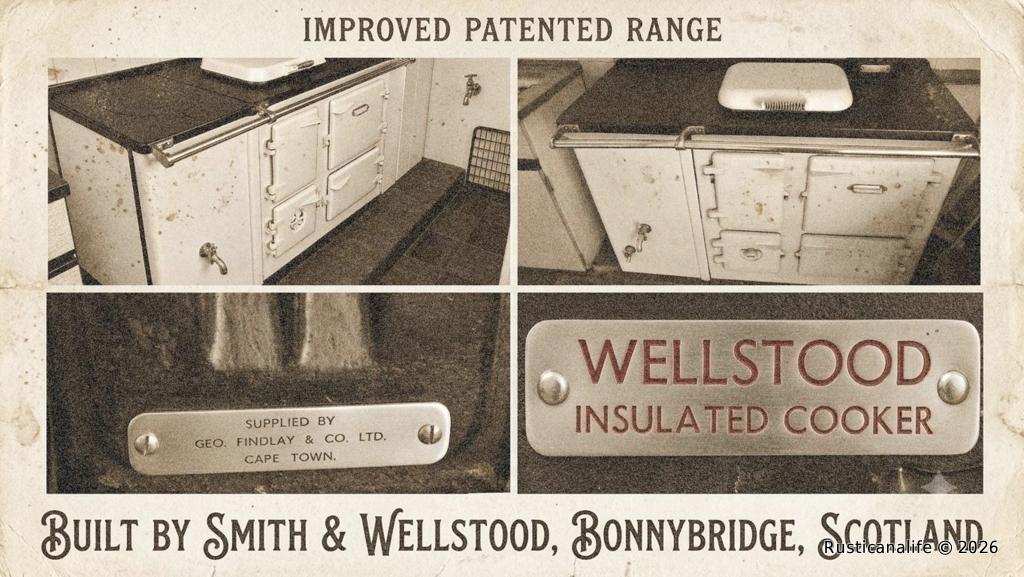
The Weight of Heritage: Why the mammoth stove is staying put.
After weeks of sitting, soul-searching, and technically trying to fathom how we are going to restore this old lady and bring her back to life, we’ve come to a crossroads. It has not been easy, to say the least. The one thing we completely agree on is that we need to bring life back to her. This wasn’t just a design choice; it was a heartfelt sentiment passed down by my late dad. He wanted nothing more than to see that grand old lady cooking up a storm and heating the entire house once again.
Previous post: July 16, 2025 The Herculean Haul: Transporting an antique coal and wood-burning stove.
Our broader blueprint for the homestead is a domino effect of restoration. For now, the focus is getting the plumbing of the house completed, before moving swiftly onto the fascia and guttering replacement, followed by a meticulous window renovation and glass replacement project.
In between all this chaos, our grand plan was to uninstall the coal stove and move it into one of the vacant rooms. From there, the strategy was to strip it down and bring the components back to Cape Town for expert refurbishment. We even gave the brilliant team at Elgato Artworks the official go-ahead to spearhead the restoration and repair—a process we knew would be a marathon, not a sprint.
The dream was beautiful in its precision. When completed, the stove was slated for a prominent new position in our newly designed kitchen, complete with a modern, through-the-wall stainless steel or fibre-cement chimney stack.
Architecturally, we wanted to honour her history: The Palette: Retain the original, striking cream-ivory enamel, the contrast: Deep black cooking tops and the accents: Gleaming, polished chrome hardware and screws.
We knew from the start that replicating that original ivory enamel would be a formidable challenge. These vintage stoves were originally processed in industrial-sized, high-temperature kilns to fuse the glass-like enamel to the heavy iron. We made a pact: if sourcing that specific high-heat ivory enamel proved impossible, we would pivot to a classic, sleek high-heat matte black. But preserving her historical integrity would always remain our North Star.
The Great Reckoning: When physics defeats sentiment. The Update: A change of heart, a clash of physics, and a new destiny.
There is a fine line between ambitious restoration and fighting the laws of physics. Recently, the “brains trust” here at Rusticana gathered around the workshop table, blueprints scattered and coffee mugs empty, to face a looming, heavy reality.
We had reached the phase where the logistics of the “Herculean Haul” had to be finalised. The plan was to pack up the mammoth cast-iron beast from her resting place in the arid heart of the Northern Cape and transport her over hundreds of kilometres of undulating roads down to our workshop in Cape Town, Western Cape.
But as we ran the numbers, weighed the risks, and stared down the sheer magnitude of the task, the collective decision swung decisively in a new direction: The old lady is staying exactly where she is.
The Logistics Nightmare: By the numbers, to understand why we backed down, you have to understand the anatomy of an antique cast-iron stove. These units weren’t built to be mobile; they were built to survive centuries in a single spot.
The Mass: We are dealing with an estimated weight well exceeding 400 kilograms of dense, unyielding cast iron and fire-brick lining.
The Anatomy: Unlike modern appliances, these stoves are a complex puzzle of interlocking plates, heavy internal flues, and fragile, decades-old enamel that chips under the slightest torsional stress.
And then you have the hazards of the road.
Our initial optimism was quickly overshadowed by the harsh realities of long-distance transport. The journey from the Northern Cape to Cape Town is beautiful, but it is unforgiving on cargo. The route is notorious for corrugated roads, sudden potholes, and long stretches of heat.
When we evaluated our current fleet of vehicles and trailers, the risk matrix turned entirely red. The sheer weight and awkward bulkiness of the unit proved entirely too cumbersome for our transport set-ups. Loading a half-ton block of iron onto a standard utility trailer is one thing; securing it so that the vibrations of a 600-kilometre journey don’t shatter the irreplaceable internal cast-iron brackets or crack the exterior body is another entirely.
Had we proceeded, we risked overloading our trailers, damaging our tow vehicles, or worse—arriving in Cape Town with a box of shattered, historic iron fragments instead of a re-storable heirloom. It was a logistical bridge too far.
A New Philosophy: Restoration in-Situ.
Giving up the transport plan does not mean giving up on my dad’s dream. It simply means we need to be smarter than the iron. If the mountain will not come to Muhammad, then Muhammad must go to the mountain.
Instead of bringing the stove to the Cape Town workshop, we are shifting our entire operational strategy to an in-situ restoration model.
By keeping the heavy carcass of the stove in the Northern Cape, we eliminate the primary danger of structural transit damage. The new plan involves carefully dismantling only the modular, transportable components—the chrome hardware, the removable burner plates, the oven doors, and the internal registers. These smaller, manageable pieces will make the trip to Cape Town in the back of a standard cab, safely wrapped in blankets, where Elgato Artworks can work their magic on the intricate detailing.
Meanwhile, the main, immovable body of the stove will undergo its transformation right where it sits. We will bring the tools, the specialised high-heat paints, and the sand-cleaning equipment to the Northern Cape. It will require more travel for us, but it guarantees the safety of the stove.
Honouring the Vision:
This project has taught us a valuable lesson in humility. Restoring a historic property like Rusticana isn’t about forcing our will upon the structure; it’s about listening to the house and adapting.
The dream remains unchanged. The kitchen will still be redesigned around this magnificent centrepiece. The cream-ivory and black silhouette will still contrast beautifully against a new through-the-wall chimney stack. And most importantly, the house will eventually be filled with the unmistakable, radiant warmth that only a true wood-burning stove can provide.
We are officially closing the chapter on the “Herculean Haul,” but the restoration saga is tracking firmly ahead. We are trading brute force for elegance, and we can’t wait to share the first step-by-step progress videos and photos as we strip down the first layers of time from this beautiful old lady.