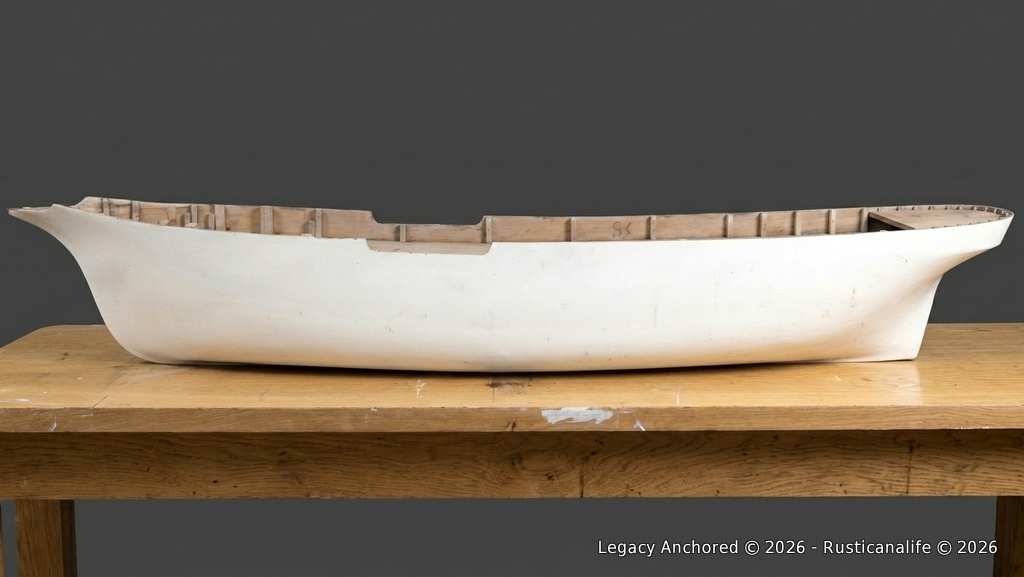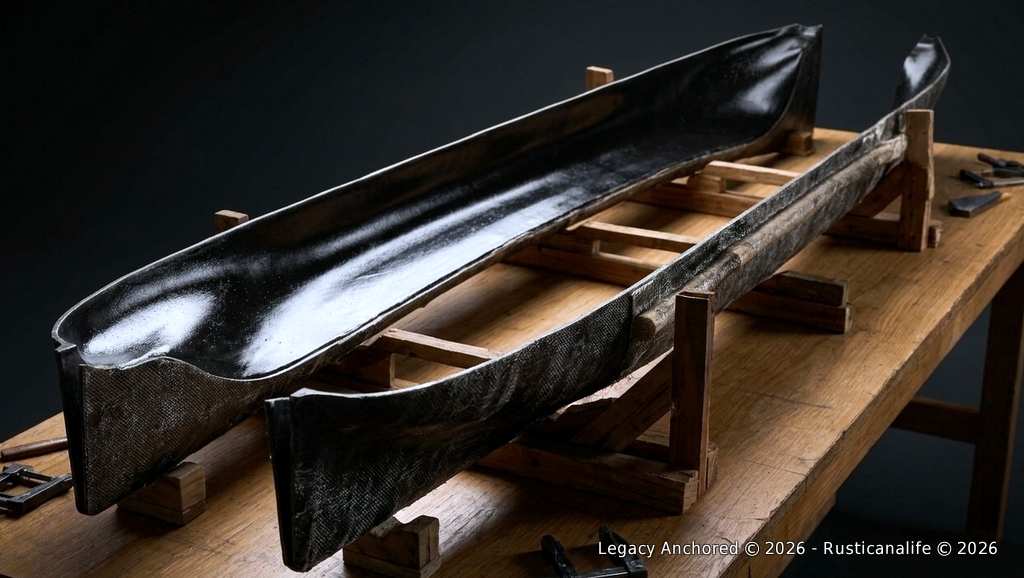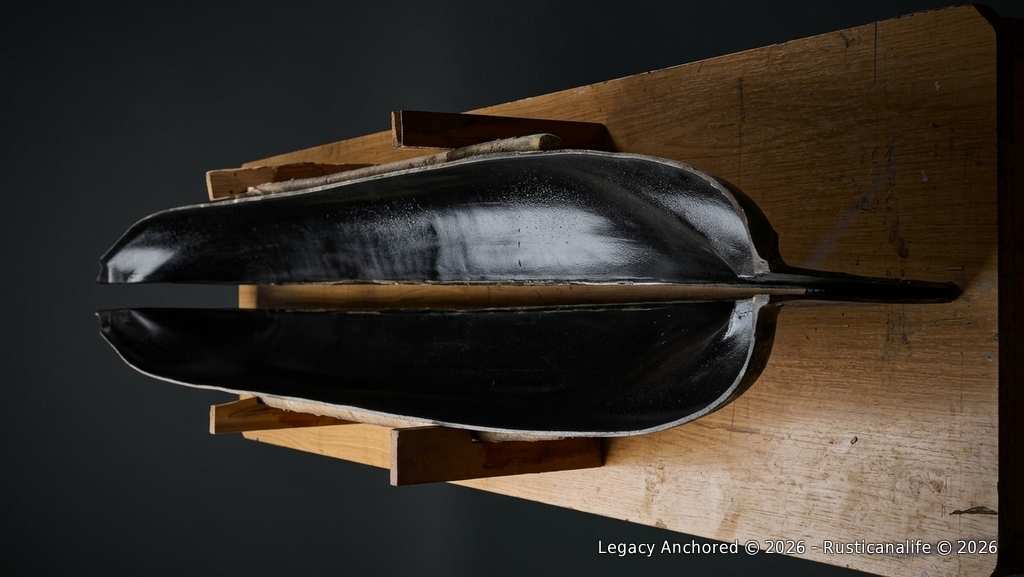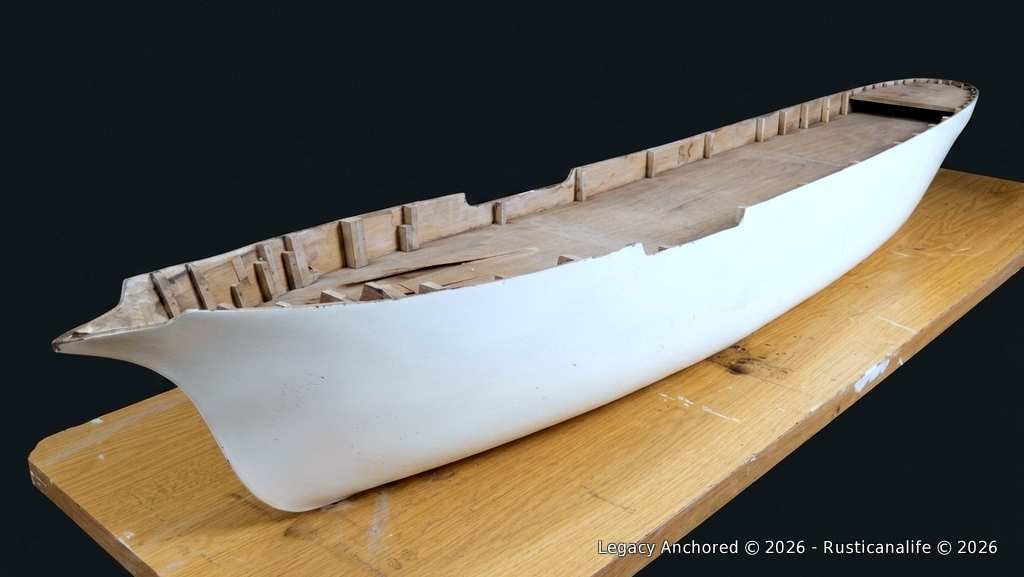
The “Plug” and “Mould” are fabricated.
Gallery in post below.
Life has a habit of filling up the years with everyday priorities—work commitments, moving house, and the constant energy of raising three sons. For my late dad, those detours meant his boat project often had to take a back seat. But his determination never really faded, and after years of stepping away and coming back to it, he finally finished the plug.
If you're not into boat building, the "plug" is basically the master pattern. It’s a full-scale, exact 3D wooden model of the hull that you build first, just so you can make a mould over it. Every curve, edge, and line on that plug determines what the final boat will look like. It took an incredible amount of patience, skill, and sheer grit to get it right, but for my dad, it was the only way to ensure the eventual fibreglass hull would accurately capture the lines of the historic S.V. L’Avenir.
Then came the pay-off. Somewhere between 1990 and 1995, he laid up the fibreglass mould over the plug, let it cure, and got ready for the big moment: "popping the hull." That’s just trade talk for separating the newly cast fibreglass shell out of the mould. There’s always a bit of breath-holding in that step, but when the suction broke and the hull popped free, years of blueprint lines and wooden framing finally became a solid, real boat standing in front of us.
Since this was always meant to be a one-off passion project rather than a commercial production run, the original plug and mould had done their job. Dad knew that custom, hand-made tooling for a single model boat wasn't something you could easily store or sell off to someone else. With the new fibreglass hull safely out and ready for the rest of the build, the plug and mould were eventually discarded—their job done, leaving behind the shell that would become his dream ship.