Trials, tones, and the pursuit of the finish.
Gallery in post below.
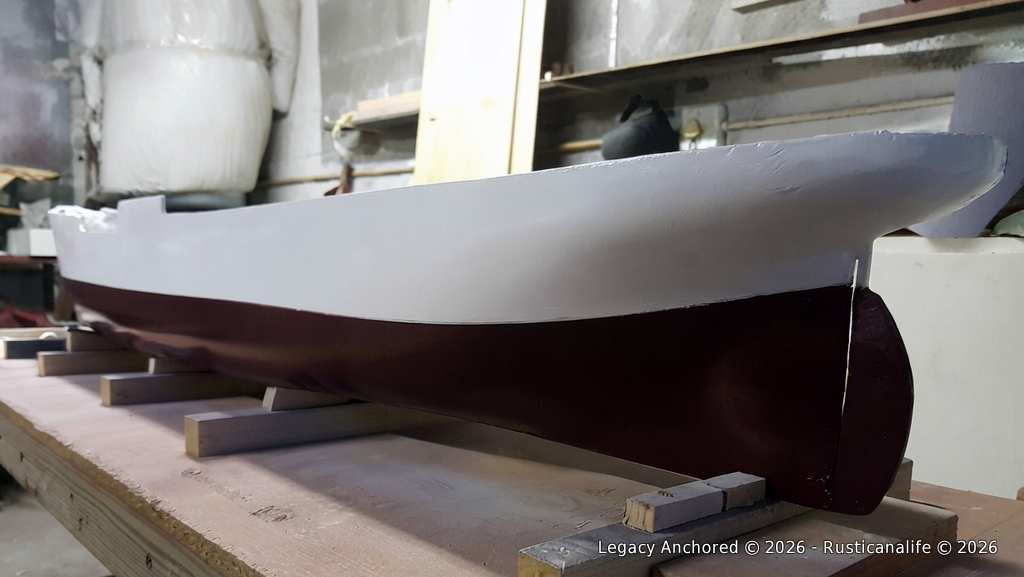
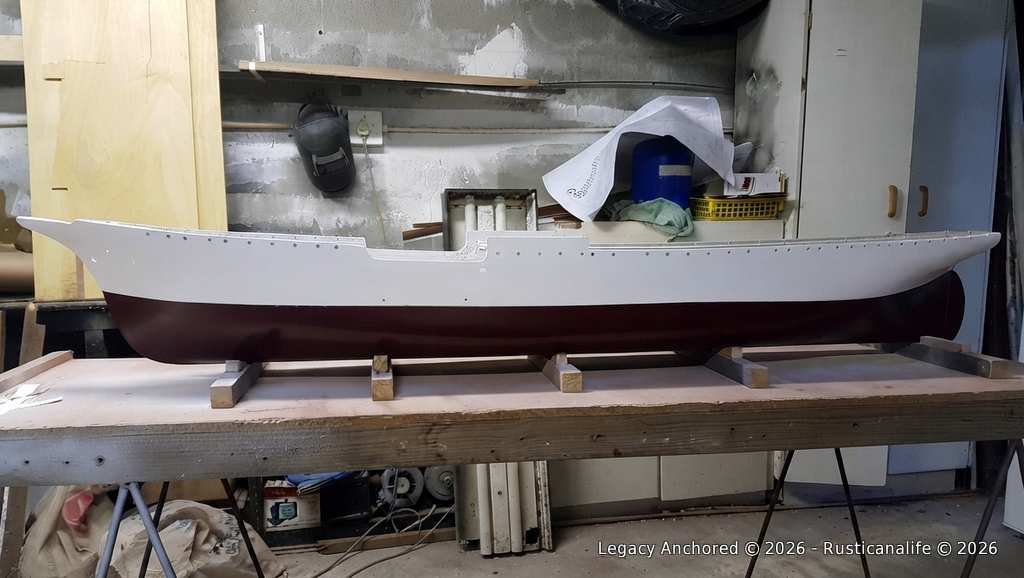
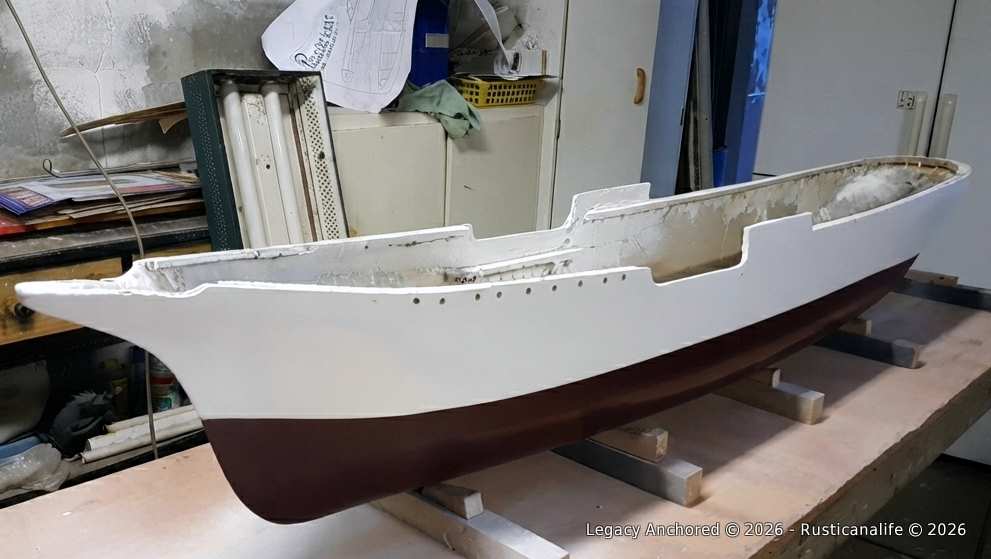
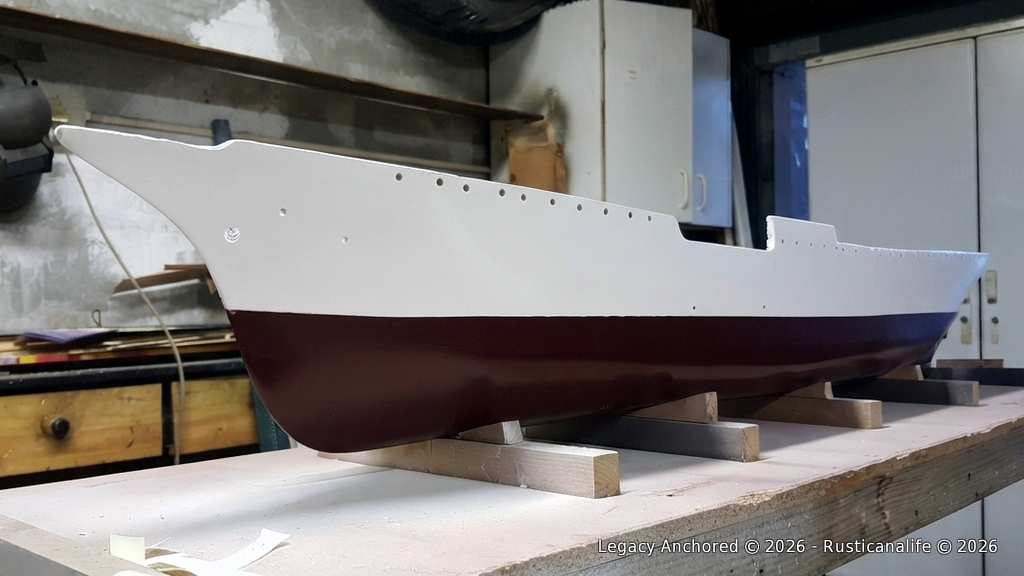
Achieving a smooth, professional-grade finish with a spray gun is harder than it looks, and getting there rarely happens on the first try. After numerous trial-and-error attempts—dealing with stubborn runs, uneven texture, and dry spray—my Dad finally dialled in the technique until he got the clean finish he was satisfied with. Every layer of paint on a build like this either highlights the careful fibreglass underneath or hides it so that he wouldn't settle for anything less than acceptable.
Even so, custom model building always comes with a few compromises. The anti-fouling colour was not quite the deep red he originally wanted for the ship's lower hull, missing the specific rich tone he had envisioned. But rather than stripping everything back down to bare fibreglass and starting over, he accepted it as it was and moved forward.
It must be clearly noted that this was a replica of a 1908 working sailing ship. The emphasis is firmly on the word working; these vessels were salt-stained, wind-beaten workhorses of the sea rather than pristine, freshly polished yachts. On a model representing that era, minor imperfections do not detract from the piece—instead, they add authentic character and a sense of rugged history to the overall build.
In a project of this scale, learning to live with minor imperfections is just part of the journey. Every scratch, slight colour variation, and adjusted detail tells the story of hands-on creation rather than factory perfection. That subtle mismatch in the red became a quiet marker of the build's human element—a small compromise tucked safely beneath the waterline on a ship that was slowly, piece by piece, becoming a reality.